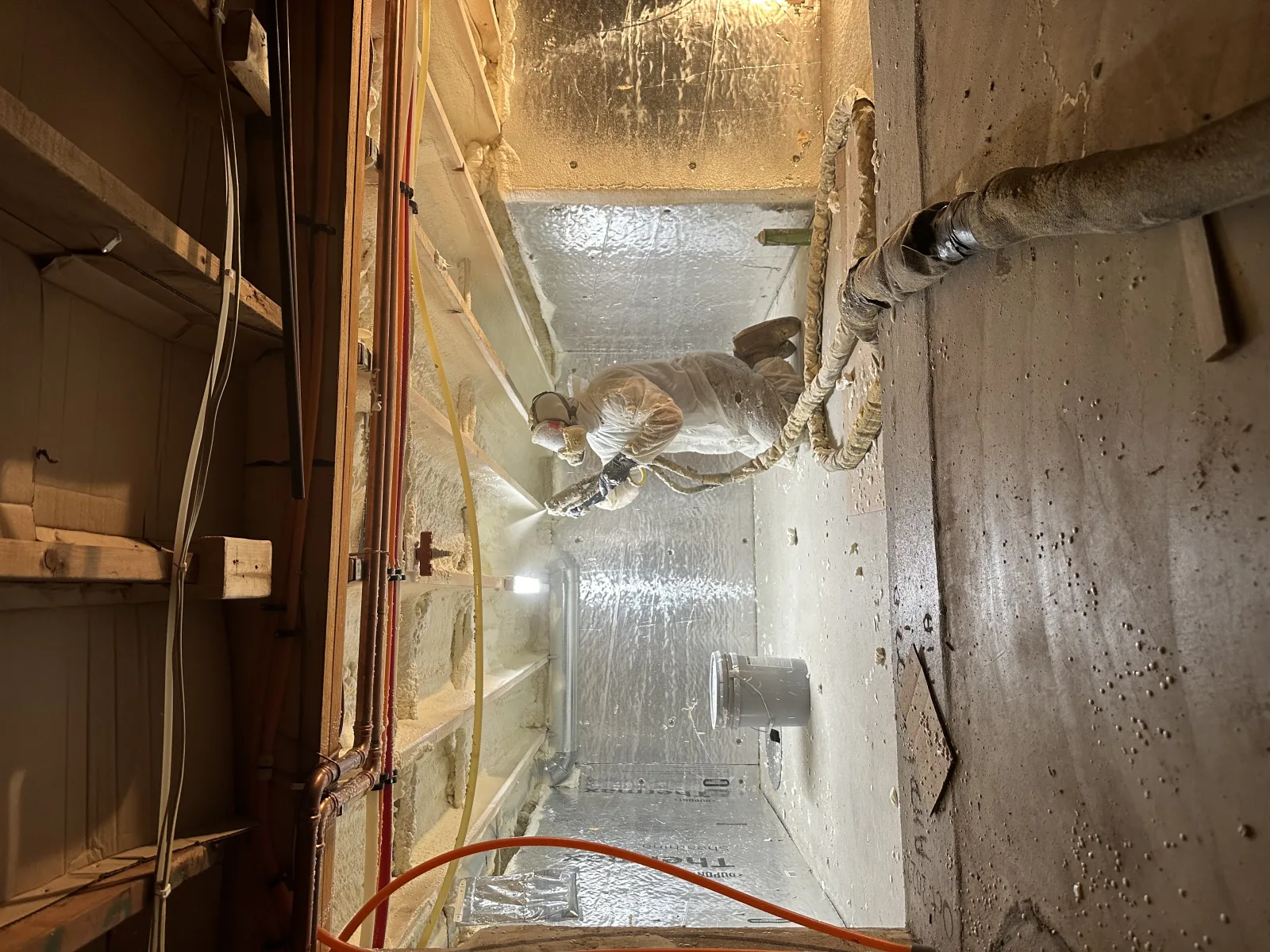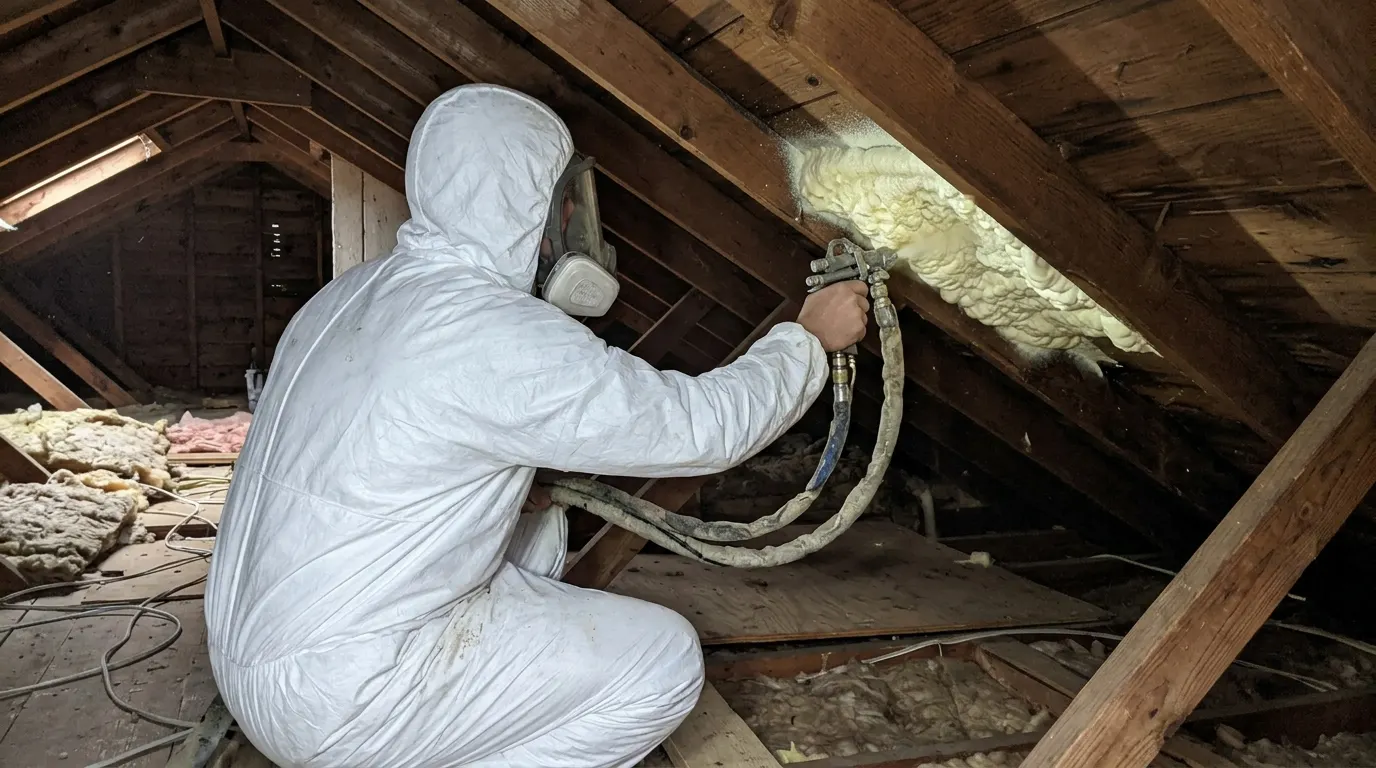
Foam quotes everywhere run on board feet — area times inches times foam type. Denver's versions run deeper (cold-climate R targets) and carry retrofit variables particular to the housing stock, from 1900s brick to 1980s tract to mountain-adjacent new builds.
Depth is the spec
Cold-climate attic targets run R-49 and up, which means real depth: a dozen-plus inches of open-cell or a hybrid stack. Closed-cell's R-7 per inch earns its premium where framing is shallow. Quotes must state type, inches, and resulting R per assembly or they are not comparable.
Removal, access, and old houses
Denver's older neighborhoods hide knob-and-tube wiring under ancient insulation — remediation before foam is a legitimate, quotable step. Removal of settled blown-in, tight attic access, and staging in finished homes all price as labor.
Climate line items
Ventilation redesign when converting to unvented rooflines, ignition barriers per code, and combustion-safety checks when tightening houses with gas appliances — the responsible items that separate insulation contractors from foam sprayers.
Payback order at altitude
Air-sealing plus attic depth first (heating dominates), rim joists second (cheap closed-cell, outsized effect), walls during remodels. Equipment note: insulate before replacing the furnace — the sealed house wants a smaller one, and smaller is cheaper twice.
A Denver-proof quote
Cold-climate targets, stated depths, knob-and-tube honesty, ventilation and combustion items included — that is the quote worth signing. Compare on cost per R delivered and fund attic depth before anything cosmetic.
Insulate before the furnace swap, every time; the smaller unit the sealed house needs pays part of the foam bill by itself.