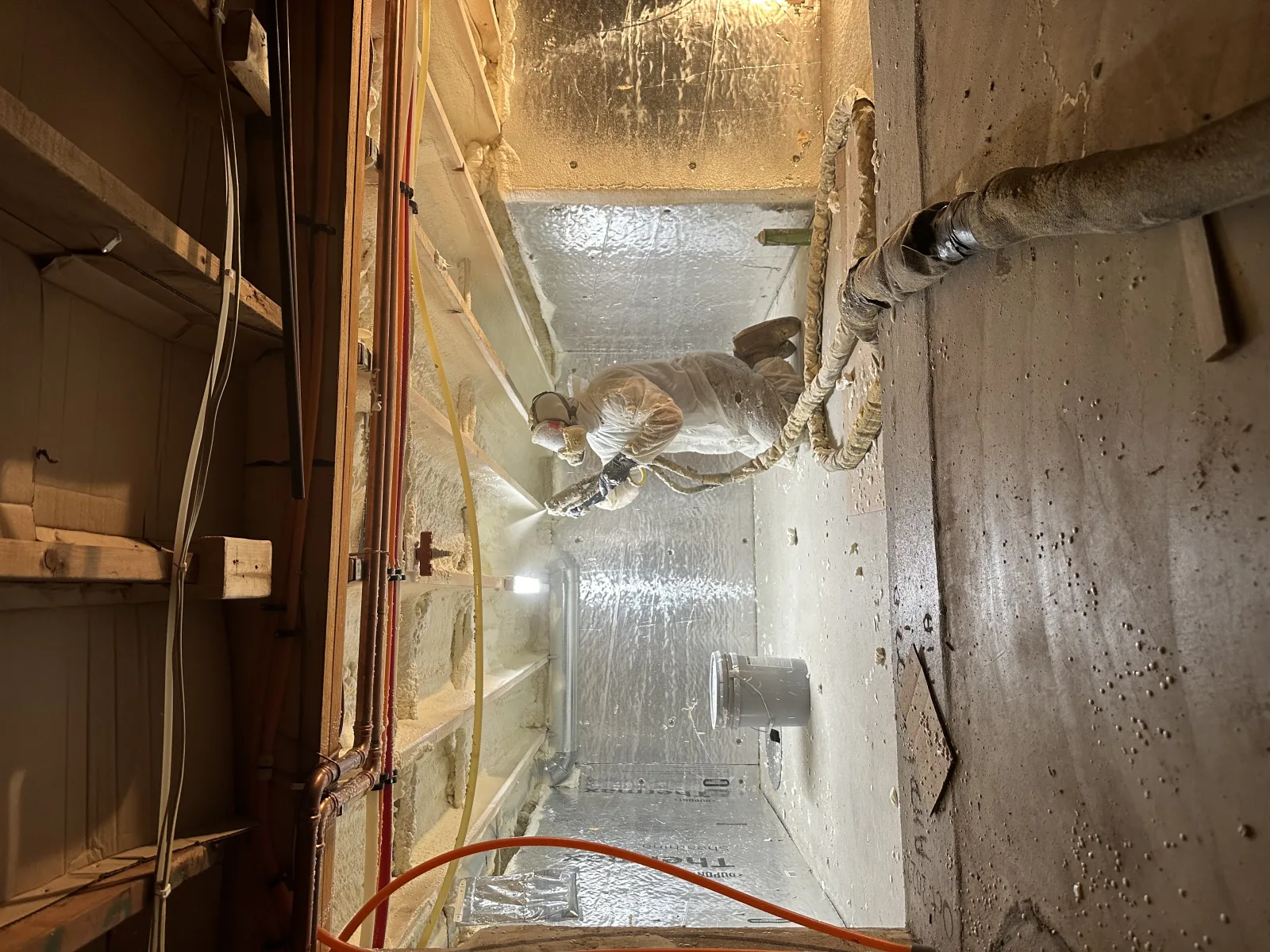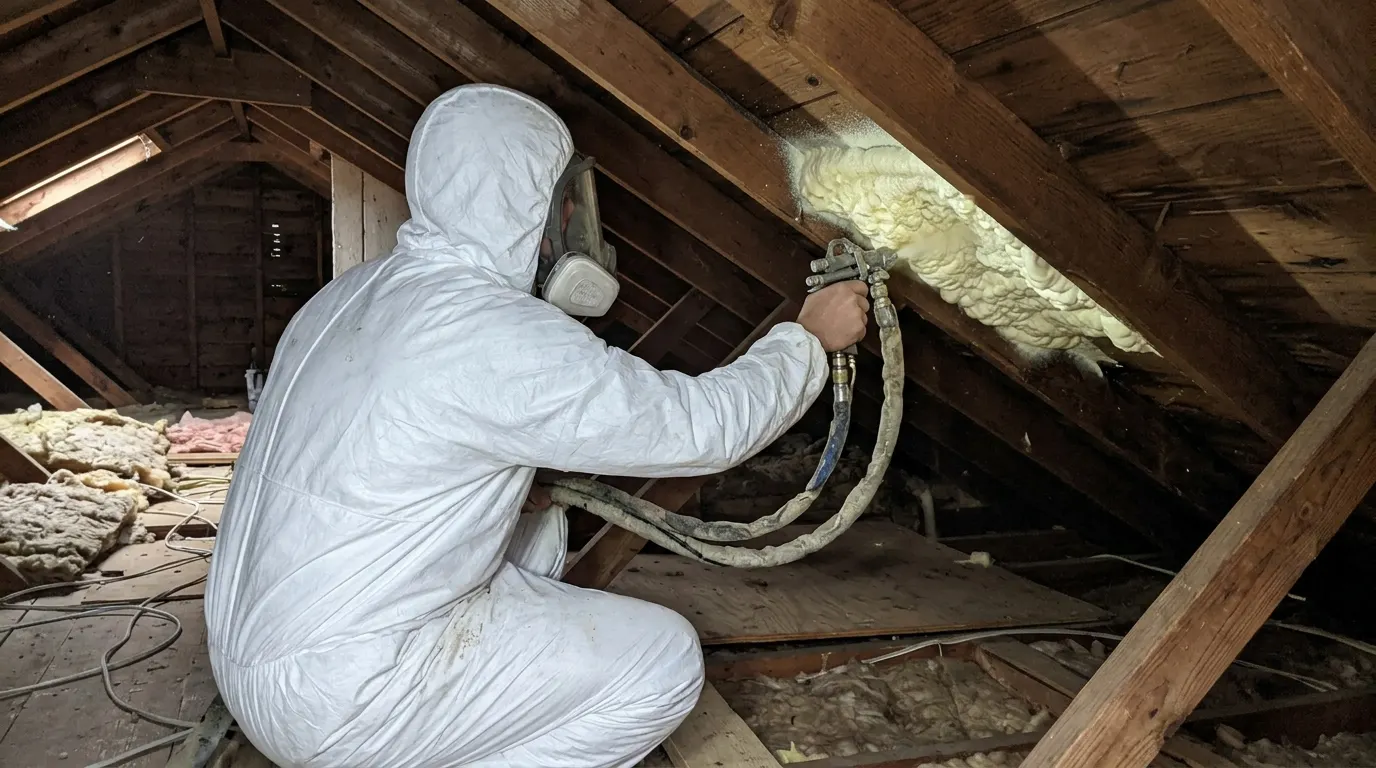
Denver asks more of insulation than most markets: sixty-degree day swings, real snow loads, intense UV, and heating seasons that bill by the therm. Open-cell (R-3.7/inch, flexible, economical) and closed-cell (R-6.5-7/inch, dense, vapor-tight) split the work along clear lines here.
Cold-climate mechanics
Heat loss dominates the energy bill at 5,280 feet, which pushes target R-values up and favors closed-cell wherever depth is limited — rim joists, shallow walls, cathedral ceilings. Open-cell fills deep attic and roofline assemblies economically where the framing gives it room.
Ice dams are an insulation symptom
Snow melting mid-roof and refreezing at the eaves means heat escaping through the lid. Foam at the ceiling plane or roof deck — sealing the warm-air leaks first — is the cure; heat cable is the symptom-management aisle. Denver's freeze-thaw does the gutter damage; the attic wrote the check.
Dry air changes the vapor math
Colorado's low humidity relaxes some moisture constraints that rule humid states — but winter vapor drive (warm inside pushing moisture toward cold sheathing) still makes closed-cell the safe call on cold-side assemblies and rim joists. Basements here run dry but cold; closed-cell on foundation walls performs on both counts.
Assignments, Denver edition
Closed-cell: rim joists, basement walls, cathedral ceilings, garages, anything metal. Open-cell: vented-attic floor upgrades, deep roofline conversions, interior sound walls. Mixed specs are normal; single-foam evangelism is a sales pitch, not a design.
Altitude summary
Depth-limited and cold-side assignments go closed-cell; deep attic and roofline volume goes open-cell; rim joists are the cheap closed-cell win every Denver basement is hiding. Get type, inches, and R per zone in writing.
Ice dams deserve the last word: they are the attic's confession, and foam is how it stops confessing.